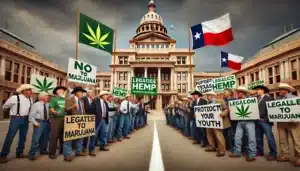
Tag: Blazed News

Rise of the Deep State: Attack of the Drones

The Drone Deception: A Psyop to Push the Narrative of a Fake Alien Invasion

In recent years, reports of unidentified aerial phenomena (UAPs) have surged, with mainstream media and government agencies amplifying the mystery surrounding these incidents. However, beneath the surface of these headlines lies a compelling and unsettling theory: these drones are not extraterrestrial but rather part of an elaborate psyop orchestrated by Deep State operatives to mislead the public and propagate a deceptive narrative.

The Deep State’s Hidden Agenda

At the heart of this theory is the belief that the Deep State—a shadowy coalition of government, military, and corporate interests—controls advanced technologies and uses them to manipulate public perception. The drones that have captured the public’s imagination are likely U.S. Navy or NASA-operated assets, deployed strategically to create the illusion of unidentified or extraterrestrial origins.

This operation is not a random occurrence but a calculated effort to steer global narratives. By using these drones to foster speculation about alien life, the Deep State can distract from other pressing issues, unify global populations under a fabricated threat, and justify expanded military budgets and surveillance powers.

The Role of the Media

Mainstream media has long been accused of being complicit in state-sponsored propaganda. In this case, it appears they have received marching orders from the Pentagon to perpetuate the mystery of these drones. Despite possessing the resources and investigative capabilities to uncover the true nature of these technologies, media outlets continue to describe them as “unknown” or “unexplained.”

By doing so, they amplify the aura of uncertainty and wonder, nudging public opinion toward a narrative of extraterrestrial involvement. This serves the Deep State’s goals, ensuring that the population remains captivated and distracted while larger geopolitical or technological plans unfold behind the scenes.

The Project Blue Beam Connection

This theory aligns closely with discussions of Project Blue Beam, a purported operation designed to deceive global populations through advanced technologies. Project Blue Beam allegedly involves:

Light Show Technology: Holographic projections capable of simulating celestial phenomena, alien spacecraft, or religious figures.

High-Frequency Audio: Techniques to create voices or sounds directly in the minds of unsuspecting individuals.

Satellite Imagery: Tools to produce convincing visuals of events in the sky, further solidifying the illusion of extraterrestrial activity or divine intervention.

The drones observed today could be a precursor to such a staged event, testing public reactions and fine-tuning the technological capabilities required for a large-scale deception.

The Endgame: A New World Order

The ultimate goal of this psyop, according to the theory, is to establish a New World Order. By uniting humanity under the threat of a common enemy—whether aliens or some other fabricated menace—the Deep State can consolidate power, impose stricter controls, and reconfigure societal structures to serve their interests.

This strategy aligns with historical patterns, where fear and crisis have often been used as tools to expand government authority. The alien invasion narrative is merely the next iteration of this tactic, leveraging cutting-edge technology to achieve unprecedented levels of influence.

Conclusion

While skeptics may dismiss this theory as conspiratorial, it invites critical examination of the narratives fed to us by powerful institutions. Are we witnessing genuine unidentified phenomena, or are we being manipulated by a calculated campaign of deception?

The truth may lie hidden in the shadows, but questioning the official narrative is the first step toward uncovering it. As we continue to explore these phenomena, it is crucial to remain vigilant, skeptical, and aware of the broader context in which these events unfold.

In the end, the drones may not be a harbinger of alien life but a stark reminder of how easily perception can be shaped by those in power.

Top Ten Prohibitionist Lies

The March 3 hearing showcased the best anti-THC talking points from the 1970’s, 80’s and beyond. Like a hit parade of bogus tunes, here’s the Top Ten Prohibitionist Lies

1. “Marijuana is a Gateway Drug”

• Falsehood: Using marijuana leads people to use harder drugs like heroin or meth.

• Reality: Numerous studies, including from the National Institute on Drug Abuse (NIDA), show no causal link between marijuana use and subsequent hard drug use. The real gateway factors tend to be socioeconomic conditions, trauma, or early exposure to addictive substances like alcohol and nicotine.

2. “Marijuana Causes Violent Crime”

• Falsehood: Legalizing marijuana increases violent crime rates.

• Reality: Crime statistics from states that have legalized cannabis (e.g., Colorado, Washington) show no significant rise in violent crime—and some cities have even reported decreases. In contrast, illegal drug trade violence often decreases when legal markets replace black market sales.

3. “Marijuana Lowers IQ and Makes People Lazy”

• Falsehood: Long-term cannabis use reduces intelligence and destroys motivation.

• Reality: Studies show no significant IQ drop in adults who use cannabis. While adolescent overuse may impact cognitive development, occasional adult use has not been linked to measurable declines in intelligence. Moreover, many successful professionals and creatives openly use cannabis without suffering motivational issues.

4. “Marijuana is as Dangerous as Heroin and Fentanyl”

• Falsehood: Cannabis is a “Schedule I drug” because it’s highly addictive and has no medical benefits.

• Reality: Marijuana is not chemically addictive in the way opioids or nicotine are, and it has established medical benefits for pain, epilepsy, PTSD, and more. In fact, it is far less harmful than alcohol and prescription painkillers.

5. “Legalization Leads to More Teen Use”

• Falsehood: When states legalize marijuana, more teenagers will start using it.

• Reality: Studies from The Journal of the American Medical Association (JAMA) and Colorado Department of Public Health show no increase in youth marijuana use post-legalization. In fact, some states have seen decreases in underage use due to better regulation.

6. “Marijuana Kills Brain Cells”

• Falsehood: Smoking weed permanently destroys brain cells.

• Reality: This myth originated from a flawed 1970s study where researchers suffocated monkeys with excessive cannabis smoke, depriving them of oxygen. Modern neuroscience shows that cannabis affects brain function but does not destroy brain cells.

7. “People Overdose on Marijuana”

• Falsehood: Cannabis use leads to lethal overdoses.

• Reality: There are zero recorded deaths from cannabis overdose. While high doses can cause discomfort, anxiety, or nausea, it does not suppress respiratory function like opioids.

8. “Legal Marijuana States Have More DUIs and Traffic Accidents”

• Falsehood: Marijuana legalization leads to more impaired driving and crashes.

• Reality: While THC can impair driving ability in some cases, overall crash rates have not spiked in legal states. Many studies indicate that drunk driving is a far bigger problem than cannabis-impaired driving.

9. “Marijuana Has No Legitimate Medical Use”

• Falsehood: There is no scientific evidence supporting medical marijuana.

• Reality: Cannabis is FDA-approved for multiple conditions, and studies confirm its effectiveness in treating epilepsy (CBD), chronic pain, nausea from chemotherapy, PTSD, and multiple sclerosis. The U.S. government even holds a patent on cannabinoids for their neuroprotective effects.

10. “Marijuana Legalization Harms the Economy”

• Falsehood: Legal weed will damage businesses and hurt the economy.

• Reality: Legal cannabis is one of the fastest-growing industries, generating billions in tax revenue, creating hundreds of thousands of jobs, and reducing costs related to law enforcement

SB3 to be heard in Texas House State Affairs Committee

Monday morning at 8am the Texas House State Affairs Committee will begin, and will include SB3 on their agenda for the day along with HB 28.

This does not mean that the committee will hear the bill the first thing in the morning. It is possible that other bills may be added and heard first with minimal testimony, just to get them out of the way.

At the time of writing though only the two hemp bills sit on the agenda for the committee that day. It could be expected that many people show up and something similar to what Texans saw in the Senate committee hearing could take place with it being an all day hearing of testimony.

THIS IS THE LAST CHANCE FOR TEXANS TO VOICE ON THE RECORD WHAT THEIR CONCERNS ARE WITH SB3

If you are a shop owner and your livelihood is on the line because of this bill, this hearing should be priority for you. This is the last time and only time in the House that your testimony can go on the official record and everyone gets a chance to testify.

The hearing will take place in the Reagan building in room JHR20. That’s on the 2nd floor of the Reagan Building which can be located on the map above circled in red. You must register at the capitol the day of the hearing to testify. Testimony will be limited to 2 min and the House hearing are usually strict on the 2 min time limit unlike the Senate which gives some leniency.

To submit written testimony to the Texas House, prepare a concise document (ideally under 3-5 minutes worth of reading try to stay within 1 to 2 pages max) and submit it to the committee clerk, along with 20 copies for the committee members, before or during the hearing.

TIPS ON CRAFTING and GIVING TESTIMONY

Stories that are common are not bad, but get repetitive and implicitly unwanted as they become memorable in a more negative light than positive. Give your original perspective, listen to other testify and mold your own verbal testimony to what others have noted as to not overlap so much.  It is not advised that one speak on medical topics as though they are medical experts unless they are a medical expert, the Senate is using this against the industry in that it proposed they should be in the medical program (despite its gross limitations).

To go over this again, this is meaning don’t talk like a medical expert or the medical relief it gives you or your clients. Therapeutics is one thing, but discussing THCa like its the fuel for healing everything is not a good move.

If you have any questions, feel free to message us through our contact page, social media accounts Facebook and Instagram, or even on LinkedIn. We want to be organized and professional.

And last but not least, dress business casual or business professional. A good rule of thumb is dress LIKE YOU ARE GOING TO COURT AND GOING TO BE IN FRONT A JUDGE. The Capitol is an official court house and the attire of such meetings is expected to be approximate as such. Dressing as though you are going to a grunge concert in the middle of Iowa give an impression of a lack of concern or care for your attendance and the gravity of the matter at hand.

Just relax and be calm

It is an emotional hell ride at times and the mileage of what you feel may vary. That’s okay. Anger and Sadness are not uncommon, but it is not justification to go into a physical tantrum. It can get you removed from the building and it doesn’t look good. And do not use foul language, it isn’t classy to sound like a salty sailor pulling into Baltimore.

Texas, lets go defend our market and get the right moves made to make our market even better with proper regulations.


Story originally appeared on our with colleagues website at Texas Cannabis Collective:

SB3 to be heard in Texas House State Affairs Committee

Texas Smoke Shop Owners React to New THC Legislation


LifestyleCannabisCannabis Law

Austin, TX – State legislators are considering a  ban of the sale of all consumable hemp products, leaving the cannabis industry and cannabis advocates in the State of Texas in an uproar.

New cannabis legislation threatens to dismantle a $5.5 Billion industry by bringing an end to the sale of all consumable hemp products in Texas.

This will affect over 10,000 businesses in Texas according to the latest estimates, and over 55,000 jobs will be lost.

“We haven’t abused any loopholes in legislation, because we did not write the legislation nor were we asked to help or assist in the regulations” states Ahmad Alnajjar, owner of Trippiez Smoke Shop. “Everything we have sold and produced has been federally legal with the recent federal farm bill guidelines. We want safety like the legislators do, we WANT proper regulation to ensure safety, abide by the law, and provide the right products for millions of Texans who rely on this as much as we rely on them.”

With five locations in Austin and plans to open an additional location soon, Trippiez Smoke Shop will definitely feel the burn when this legislation is enacted. Imposing fees, creating criminal offenses, and providing an administrative penalty for violations is the primary objective of the new legislation. TX SB3 is sponsored by several members of the state Senate and championed by Lt. Gov. Dan Patrick. Texas legalized hemp-derived products in 2019, but according to the Lt. Gov., retailers have abused this by selling products with a THC level of above 0.3%. CBD and CBG products are exempt provided that they are registered, plainly labeled and in resealable, child-proof containers.

“All the businesses who follow regulations are being punished for the very very few businesses who act carelessly”, protests Alnajjar.

The concerns of those owners who will not have to close their doors is significant, as well. Adjustments will have to be made such as cutting labor costs, and profit will be lost on surplus hemp-derived inventory if not sold before the allotted grace period. 


For more information, contact (512) 291-2325 or visit Trippiez online.

Trippiez #1 12636 Research Blvd b104, Austin, TX 78759

Trippiez #2 13764 Research Blvd Austin, Texas 78750

Trippiez #3 aka SOCO 6606 S Congress Ave, Austin, TX 78745

Trippiez #4 16238 Ranch to Market Rd. 620 Suite G, Austin, TX 78717

Trippiez #5 11699 Hero Way W, Leander, TX 78641

Bad Science, Political Raids, and the Setup Behind SB 3

WARNING: THE REPORT DAN PATRICK DOESN’T  WANT YOU TO SEE!

In Texas, we’ve seen this before: a political agenda dressed up as public safety, a compliant bureaucracy, and the weaponization of bad science to justify bad law. But this time, it’s not marijuana. It’s legal hemp—and the state’s own forensic watchdog warned them not to do it.


The Science Was Clear


In July 2021, the Texas Forensic Science Commission (FSC) issued a report questioning the reliability of gas chromatography (GC) testing methods—specifically the kind used by Armstrong Forensic Laboratory—in determining THC levels in cannabis samples. The problem? GC destroys the chemical integrity of the sample by heating it, converting non-psychoactive THCa into delta-9 THC. The result: legal hemp often appears “hot” when tested this way.

By April 2025, the Commission had grown more urgent. In a formal warning, it told prosecutors and law enforcement not to rely on GC-MS without derivatization—the exact method Armstrong was using—because it does not distinguish between THCa and delta-9 THC in processed products like vape pens and edibles. The Commission’s position was clear: GC is not scientifically valid for the enforcement of Texas hemp laws. The right tool? High-performance liquid chromatography (HPLC), which preserves the cannabinoid profile without artificially inflating THC levels.


DPS Didn’t Just Ignore the Science—They Sought Out Bad Results

EDITORS NOTE: Since our reporting on this last week. The Official PDF has been removed. Click Above.

Despite having access to state-run, accredited labs that used validated HPLC methods, the Texas Department of Public Safety (DPS) chose Armstrong Labs. Why? Because Armstrong’s flawed GC testing produced the kind of “hot” results that could turn lawful retail inventory into felony contraband on paper.

This wasn’t just negligence—it was selective science-shopping. DPS bypassed better labs and used the one that would give them the numbers needed to justify search and arrest warrants. Those warrants led to a coordinated series of raids in August 2024 across North Texas, most prominently in Allen, where nine hemp retailers—nearly all minority-owned—were raided. Doors were kicked in. Products were seized. People were arrested. Lives were disrupted.

And when asked about the scientific controversy, DEA Special Agent Eduardo A. Chávez, standing behind a row of local police chiefs, said the quiet part out loud:

“We’re not going to get into a scientific debate.”

That’s because there was no debate. The science was already settled—just not in their favor.


Dan Patrick’s Fingerprints

The timing and utility of these raids are no coincidence. Lt. Governor Dan Patrick, a long-time prohibitionist, has made clear his desire to eliminate the hemp-derived THC market. Along with Senator Charles Perry, he introduced Senate Bill 3, a sweeping measure to criminalize and regulate hemp in ways that would effectively shut down thousands of small businesses statewide.

But Patrick’s proposals needed fuel—a sense of public danger. That’s where the Allen raids came in. News coverage of the raids, complete with sensational claims about high-THC products and cash seizures, created the illusion of widespread criminality. Those raids—and the test results behind them—became Exhibit A in the Senate’s push for SB 3.

In reality, the entire operation was built on sand. The lab method was known to be invalid. The warrants were based on forensically unsound evidence. The prosecutions have largely stalled or gone unfiled. But the political damage was done—and the policy momentum created by those raids is still being used to push bans, criminal penalties, and massive regulatory overreach.


The Consequences

Dozens of stores have closed. Millions in assets have been seized. Texas entrepreneurs—many from immigrant and minority communities—have been branded criminals for selling federally legal hemp products. Some of the retailers caught in this net can’t even afford legal counsel; their bank accounts are frozen, their reputations destroyed.

All because DPS chose the wrong lab on purpose.


If It’s Not Illegal, It’s Worse

 
Business Speak to Senate Hearing

Some may argue no laws were broken. But that’s the problem. When law enforcement uses scientifically invalid methods, even after being formally warned twice by the state’s own scientific authority, it isn’t just a technical error. It’s an abuse of power. Under Texas Penal Code §39.03, this pattern begins to resemble official oppression—public servants using their authority to target people unjustly under the color of law.

And the Fourth Amendment may also come into play. Raids based on scientifically discredited probable cause are ripe for constitutional challenge. The state didn’t just bend the law—it bent science, and it bent justice.


The Big Lie, Texas Edition

Dan Patrick’s prohibitionist crusade depends on the belief that hemp stores are fronts for drug dealers. But the science doesn’t support that claim, and neither do the facts. What we’re seeing is the deliberate manufacture of criminality using rigged lab results and coordinated enforcement—all to push a bill that benefits entrenched political allies and clears the market for the few operators who can afford to comply.

This is Reefer Madness 2.0—driven by bad labs, bad busts, and big lies.

Explainer: Why Governor Abbott Is Asking the Texas Supreme Court to Remove Rep. Gene Wu from Office

In a move that’s being called both historic and controversial, Texas Governor Greg Abbott has asked the state’s highest court to remove Representative Gene Wu from office. Abbott’s legal team filed an emergency petition on Tuesday with the Texas Supreme Court, invoking an obscure legal tool known as a writ of quo warranto. If the Court grants the petition, it would mark the first time in modern Texas history that a legislator is removed by judicial action rather than by voters or by their colleagues in the Legislature.

A writ of quo warranto is a legal proceeding used to challenge whether someone is lawfully holding public office. Latin for “by what authority,” the writ is typically used in cases where a person is accused of usurping an office they aren’t entitled to hold, or of committing acts that legally forfeit their right to continue serving. In Texas, it is most often used to challenge appointed officials who fail to meet statutory requirements, but it has rarely been applied to elected legislators.

The petition arises from the decision by Wu and dozens of House Democrats to leave Texas on August 3 in order to break quorum during the current special legislative session. By fleeing the state, they prevented the House from conducting official business, including votes on Governor Abbott’s special session priorities—chief among them, a proposed congressional redistricting map. The Democrats flew to Chicago aboard a privately chartered jet, echoing tactics used during previous quorum breaks in 2003 and 2021.

Abbott’s legal filing argues that Wu’s actions amount to abandonment of office. According to the Governor, the Texas Constitution requires that when the Governor calls a special session, the Legislature shall meet. Abbott contends that quorum-breaking violates that constitutional duty, and that a deliberate, prolonged absence for political purposes constitutes a forfeiture of the office. In addition to abandonment, the petition accuses Wu of effectively soliciting or accepting bribes. Specifically, it points to the chartered flight and political fundraising appeals tied to the quorum break as evidence that Wu received something of value in exchange for withholding his vote or official presence—an act that, if proven, could trigger automatic forfeiture of office under Article XVI, Section 41 of the Texas Constitution. The filing also argues that Wu’s indefinite absence from the state could be construed as a loss of residency, which under Article III, Section 23, would create a vacancy.

While the Texas Supreme Court has original jurisdiction to hear quo warranto petitions against state officials, the legal question remains highly unsettled. No Texas court has ever removed a legislator for participating in a quorum break. In fact, several past instances—most notably the 2003 “Killer D’s” walkout and the 1979 “Killer Bees” incident in the Texas Senate—were resolved politically, not judicially.

As of publication, Representative Wu has not filed a formal legal response. However, legal scholars and civil rights organizations have flagged several potential defenses. One of the strongest is the separation of powers argument: the Texas Constitution gives the House of Representatives the exclusive power to judge the qualifications, behavior, and discipline of its members. Wu’s team is likely to argue that if the House wants to expel or censure him, it has the tools to do so—and that the judiciary, or the Governor, has no authority to interfere in internal legislative matters.

Another possible defense is rooted in the First Amendment. Supporters of Wu’s actions contend that the quorum break is a form of protected political protest, particularly given the stakes of the redistricting debate and the legislative process itself. From this perspective, fundraising to support travel and communications during the protest is not bribery, but a lawful extension of political expression and association.

Wu may also argue that he has not abandoned his office. He has not resigned, and he continues to perform constituent services remotely. Unlike someone who ceases all contact or activity, Wu’s absence is temporary and strategic—intended to influence policy outcomes, not to abdicate responsibility. His defenders will also likely note that accepting travel assistance or campaign donations during a political protest does not, in and of itself, constitute bribery unless there is a clear quid pro quo arrangement.

Questions have also been raised about whether Governor Abbott even has the legal standing to bring this case. Under Chapter 66 of the Texas Civil Practice and Remedies Code, quo warranto actions are typically initiated by the Attorney General or a local district or county attorney, not by the Governor himself. While Abbott’s team argues that the Governor has the inherent power to seek judicial clarification on vacancies under the Constitution, others may view this as an overreach of executive authority.

Finally, the timing of the case raises issues of ripeness and potential mootness. If Wu returns to the state or the special session concludes before the Court rules, some legal observers argue that the issue could become academic. In prior cases, such as In re Turner in 2021, the Texas Supreme Court addressed aspects of quorum-breaking but declined to remove any members or define it as abandonment of office.

What makes this case particularly significant is the potential precedent it could set. If the Court finds in favor of the Governor, future walkouts—regardless of party—could be met not with political consequences, but with judicial removal. That would dramatically change the landscape of legislative protest in Texas, and potentially in other states as well.

The Texas Supreme Court has been asked to issue a ruling by Thursday, August 7, citing the urgency of the special session calendar. If the petition is granted, it would open the door to a high-profile legal showdown that pits legislative independence against executive authority, and tests the limits of protest in the digital and partisan age.

Blazed News will continue to monitor the case closely and provide updates as it develops.


Skip to content